Daughters of Mary Immaculate International
St. Michael the Archangel Parish, Orion, Bataan
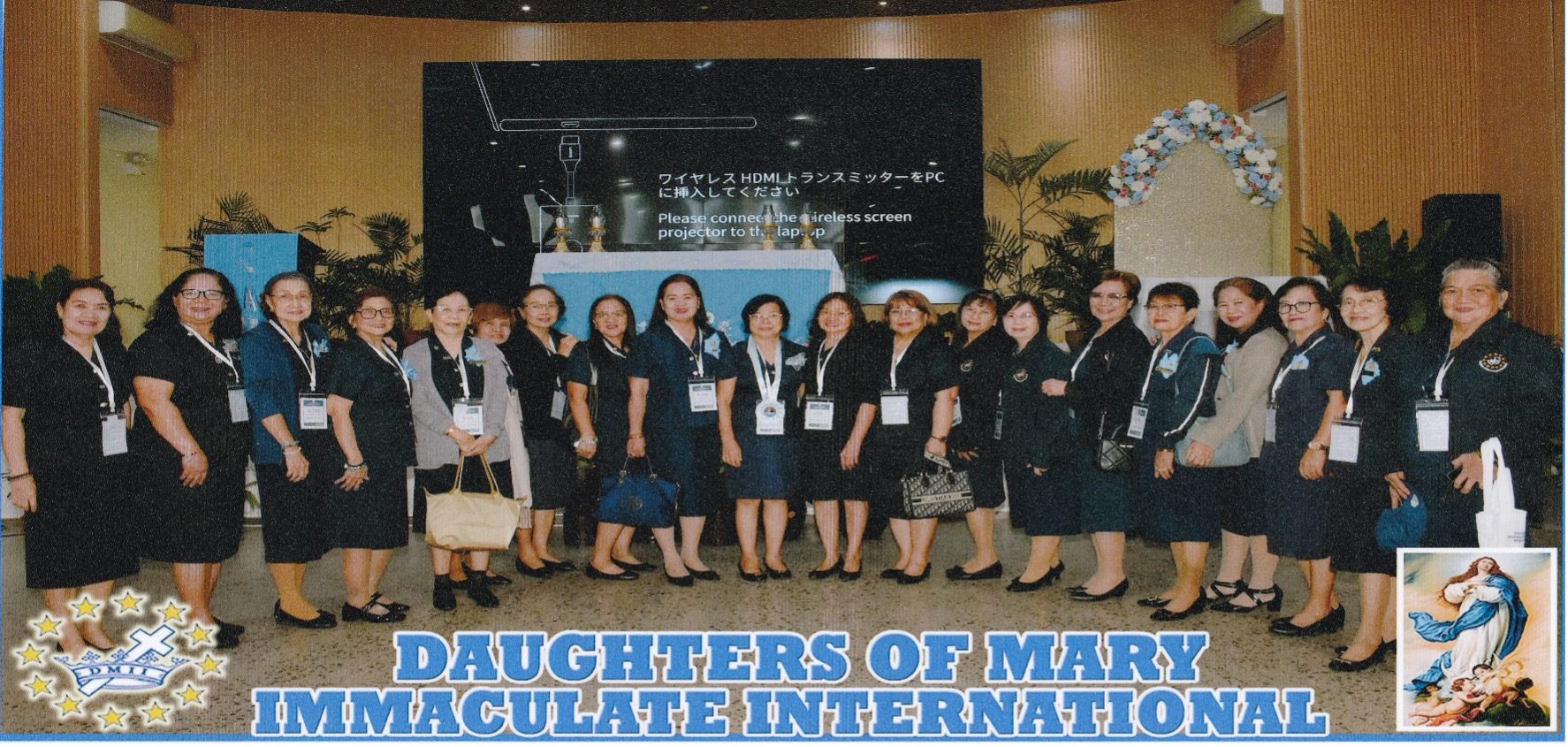
The Daughters of Mary Immaculate International (DMII) is an organization of Catholic women, inspired by the Blessed Mother, united in faith and dedicated to serving God, the Church, and the community through apostolic, charitable, and social works.
Overview
The Daughters of Mary Immaculate International traces its beginnings to the religious organization known as Daughters of Isabella which had its head office in New Haven, Connecticut. The first Philippine circle (unit) was the Holy Rosary Circle No. 856 which was formally organized in Manila on May 24, 1951. More circles were subsequently organized in the country. The Daughters of Isabella composed of spouses of the Knights of Columbus, existed for about three decades.
At a general meeting convened by His Eminence, the late Jaime L. Cardinal Sin, on April 29, 1978, in Antipolo, the Philippine Daughters of Isabella which had been declared as independent association, together with the KC Ladies Auxilliary Association, was restructured and its name changed to Daughters of Mary Immaculate. In his message during the meeting, Cardinal Sin said, “ The Daughters of Mary Immaculate is indeed a monument to the apostolic zeal and relentless dedication of some generous women who banded themselves together into another organization imbued with the same ideals and spirit.”
A few years later, DMI circles were organized in New Jersey and Los Angeles in the United States of America and in Sydney, Australia. Thus the DMI acquired an international identity. That was how the word “International” was appended to the original name of the Order, and from there on has been known as the Daughters of Mary Immaculate International.
In our parish, the Daughters of Mary Immaculate International, St. Michael Circle was organized around 70’s or 80’s. The first Regent (President) was the late Natividad Candido.
Vision
With the Blessed Mother as our model and guide, we are an Association of Catholic Women in the Philippines and other countries, strengthened in faith and committed to serve in various Apostolic activities through the Basic Ecclesial Communities (BECs), reaching out to our less fortunate brothers and sisters thru the DMII mission thrusts to help them achieve and enjoy the fullness of life.
Mission
As mandated by the Catholic Bishops Conference of the Philippines (CBCP), we are committed to pursue and accomplish the five missions, and such other missions that maybe assigned to the Association by the CBCP. Our missions are:
1. Prolife – the promotion, preservation and protection of human life from womb to tomb, including environmental concerns.
2. Morality in Media – Promoting media as an effective and wholesome instruments of communications for all kinds of informations, ideas, directives and avenues for developing and nurturing moral values.
3. Upliftment of Women Workers -Addressing current issues and concerns such as poverty, violence against women, subordination and descrimination in the workplace, trafficking of women and plight of overseas women workers.
4. Assistance to Prisoners’ Families and Their Victims – Serving the needs, both material and spiritual, of prisoners’ families and their victims.
5. Youth Welfare/Squirettes of Mary Immaculate (SMI) – The Youth arm of the DMII, which has, for its main purpose and goal, the development of leadership qualities and talents of its members with the Blessed Mother Mary as their model and guide.
Objectives
1. To promote the sanctity of marriage and the family;
2. To render mutual aid and assistance to members in good standing;
3. To promote social and intellectual interaction among its members;
4. To promote and conduct educational, charitable, religious and social work and services;
5. To help unite all Catholic women in a variety of opportunities for apostolic activity and strengthen the Catholic faith within the bonds of unity, friendship, charity, humility and sanctity;
6. To maintain active participation and involvement in civil society and in the liturgical life of the community; and
7. To preserve and respect human life and all of God’s creation.
